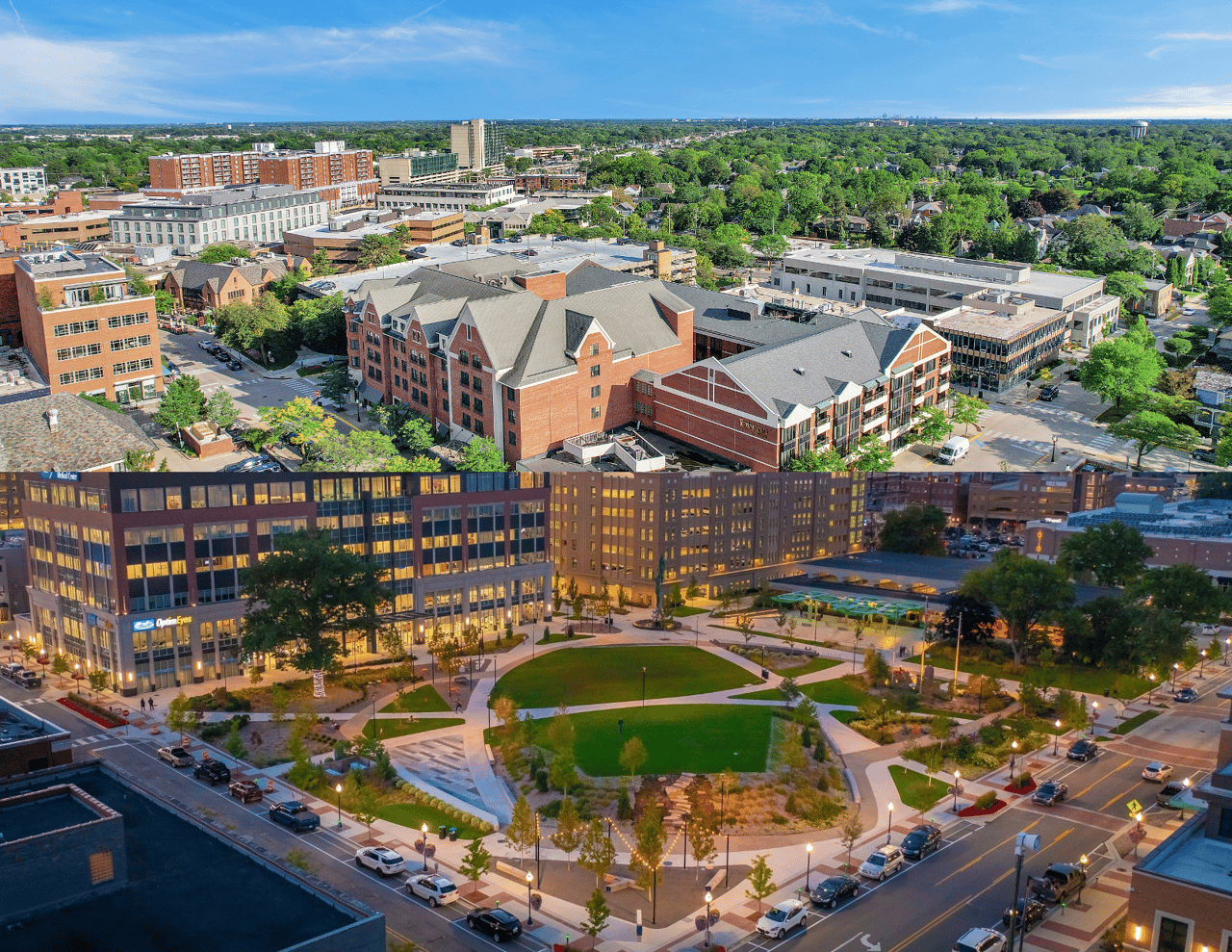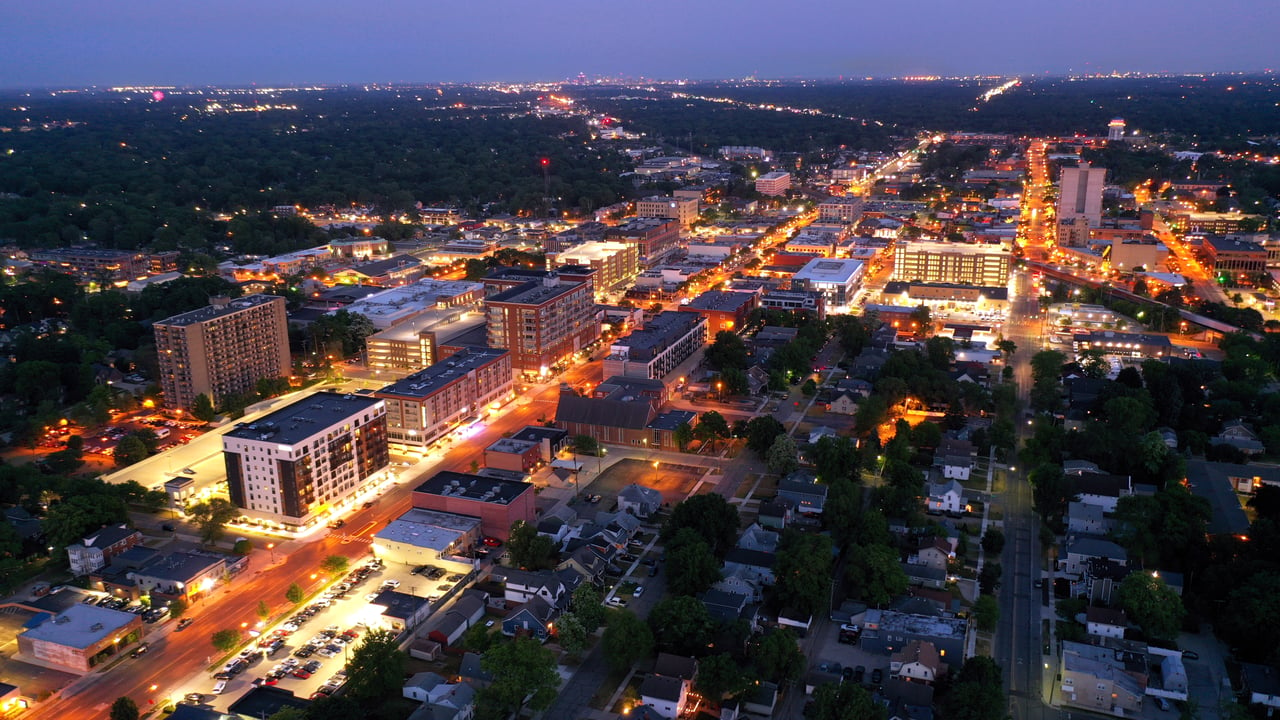
There is a reason Birmingham continues to be one of the most recognizable communities in Metro Detroit. It has an unusually strong combination of walkability, restaurants, shopping, beautiful residential neighborhoods, parks, and easy access to surrounding communities. But one of the area's biggest advantages is actually what sits just beyond Birmingham's borders.
Within a relatively short drive, you can find communities that feel completely different from one another. There are historic villages with tiny downtowns and century-old homes, quiet residential communities where wooded lots and winding streets are the main attraction, and lively small cities where independent restaurants, coffee shops, boutiques, parks, and community events create a genuine downtown lifestyle.
For someone considering a move to the Birmingham area, that variety can be a major advantage. You don't necessarily have to choose between having access to everything and living somewhere that feels personal and community-oriented. In many cases, you can have both. What they have in common is a sense of place.
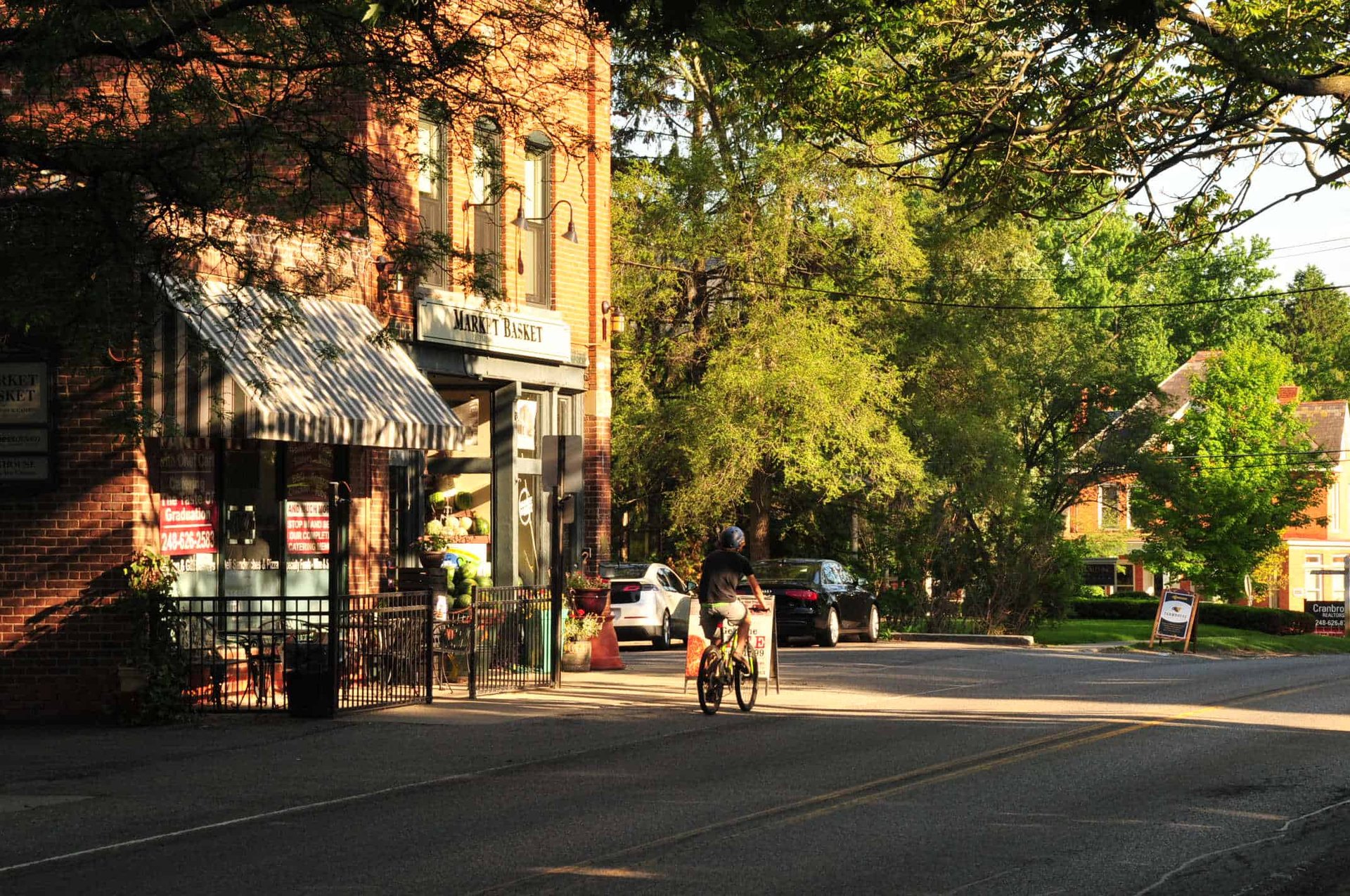
Franklin
Just southwest of Birmingham, the Village of Franklin is one of the clearest examples of a Metro Detroit community that feels like it belongs to another era. Franklin's history dates back to the 1820s, and its historic character is still one of its defining features today. The village has preserved a collection of historic homes, buildings, and streets that give its center an unmistakable small-town atmosphere. The Franklin Historical Society even maintains a self-guided tour highlighting historic properties throughout the village, including homes dating back to the mid-1800s.
The housing stock is another major part of Franklin's identity. You'll find historic homes, traditional Colonials, larger newer properties, and beautifully maintained residences tucked among mature trees. Lots tend to have a more established feeling than what you'll find in newer suburban developments, and the community's architectural character is one of its biggest draws.
Franklin is especially appealing to buyers who want proximity to Birmingham without necessarily wanting to live directly in a larger commercial district. It offers a quieter residential lifestyle while remaining close enough to Birmingham, Bingham Farms, Beverly Hills, and other nearby communities that restaurants, shopping, schools, and everyday conveniences are never far away.
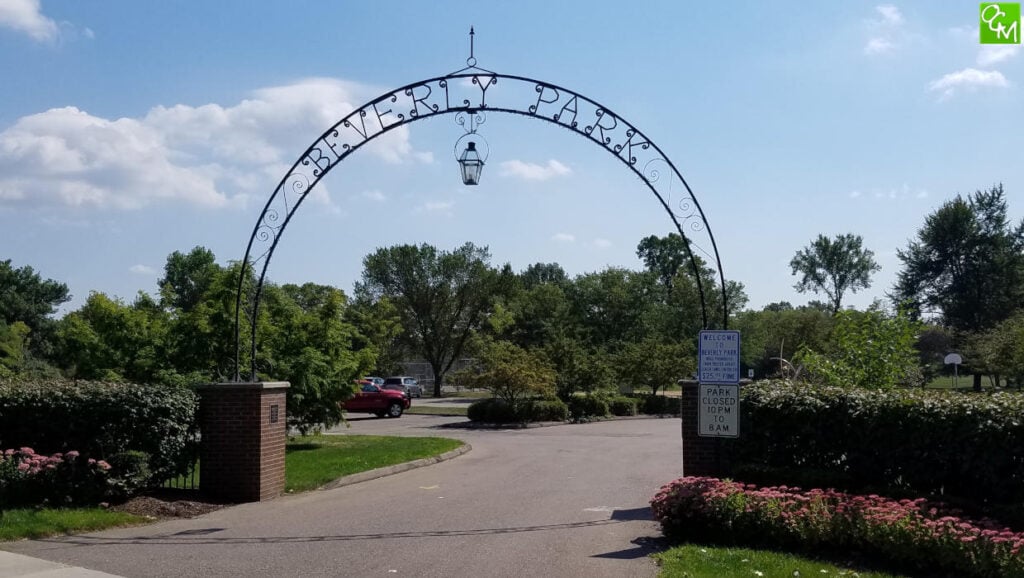
Beverly Hills
Located immediately north of Birmingham, the Village of Beverly Hills offers a very different kind of small-town experience. There isn't a traditional downtown packed with restaurants and boutiques in the same way you'll find in Birmingham or Clawson. Instead, Beverly Hills is primarily residential, with quiet streets, mature trees, parks, and a strong neighborhood feel. That distinction is important because Beverly Hills appeals to people who want the convenience of being close to Birmingham without necessarily wanting the activity of a downtown directly outside their front door.
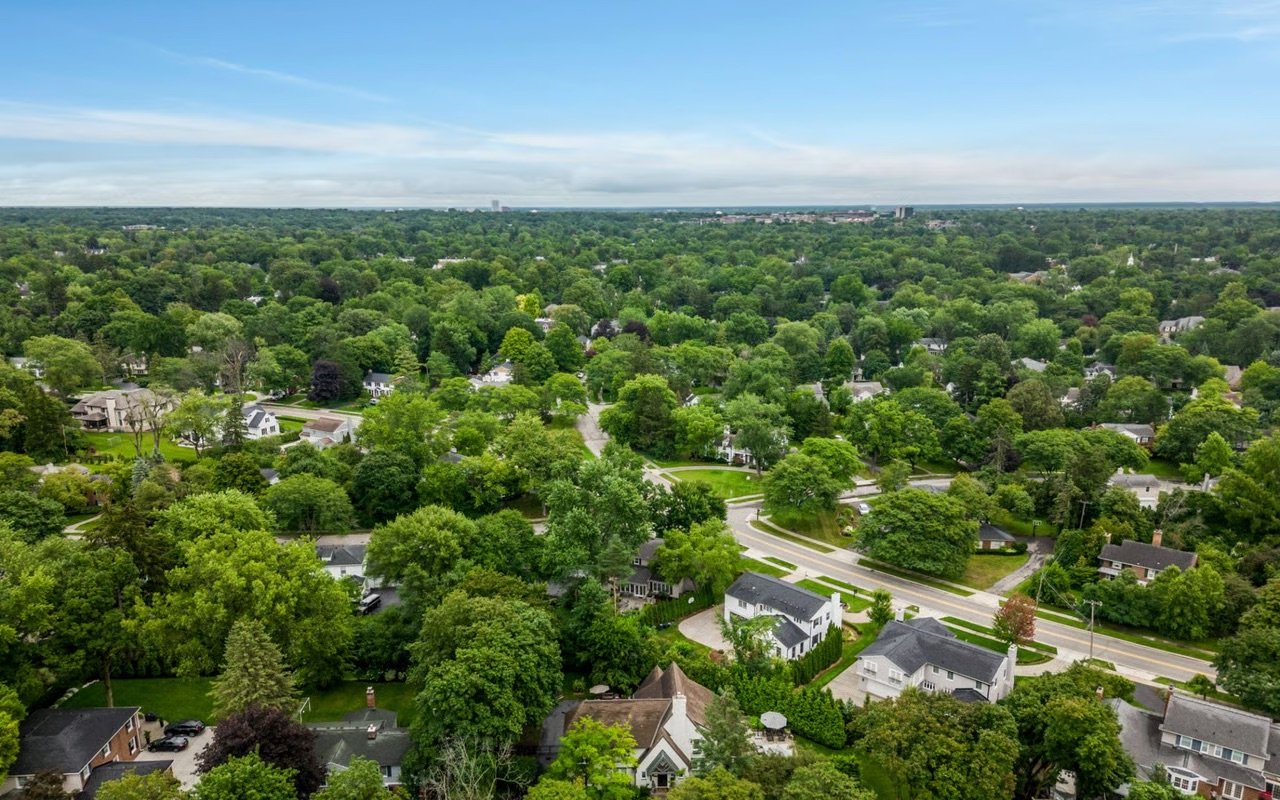
The community also has an established, traditional suburban character. Many of the homes sit on mature lots with substantial landscaping, and the streets tend to feel distinctly residential rather than commercial or heavily trafficked. For families, one of the biggest attractions is the feeling of neighborhood life. Parks, recreation, community events, and residential streets create the kind of environment where the community itself becomes part of the lifestyle.
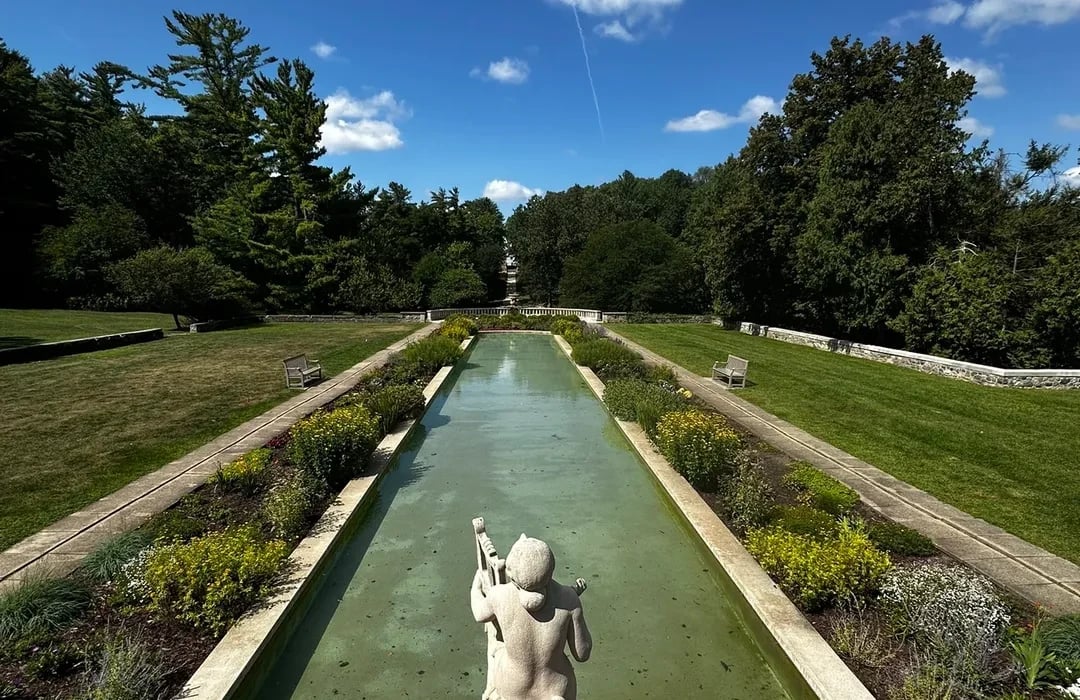
Bloomfield Hills
Just north and northwest of Birmingham, Bloomfield Hills offers one of the area's most distinctive residential environments. Bloomfield Hills is technically a city rather than a small town, but in terms of scale and atmosphere, it absolutely belongs in this conversation. It is predominantly residential, known for large properties, wooded landscapes, winding roads, and some of Metro Detroit's most architecturally significant homes. The city is also home to Cranbrook, one of the region's most important cultural and educational destinations.
The streets can feel surprisingly secluded considering how close the community is to major commercial areas. Large trees, rolling terrain, winding roads, lakes, and expansive properties create a sense of privacy that is unusual for such a centrally located community. Architecture is another major part of the experience. Bloomfield Hills has long attracted architects and homeowners interested in distinctive design, and the broader Cranbrook campus adds another layer of architectural and cultural significance to the community.
For buyers who want a larger property, a more private setting, and a luxury-oriented residential environment while remaining minutes from Birmingham and other Oakland County communities, Bloomfield Hills is one of the most obvious alternatives. It is less about walking to dinner and more about coming home to a beautiful property in an established setting.
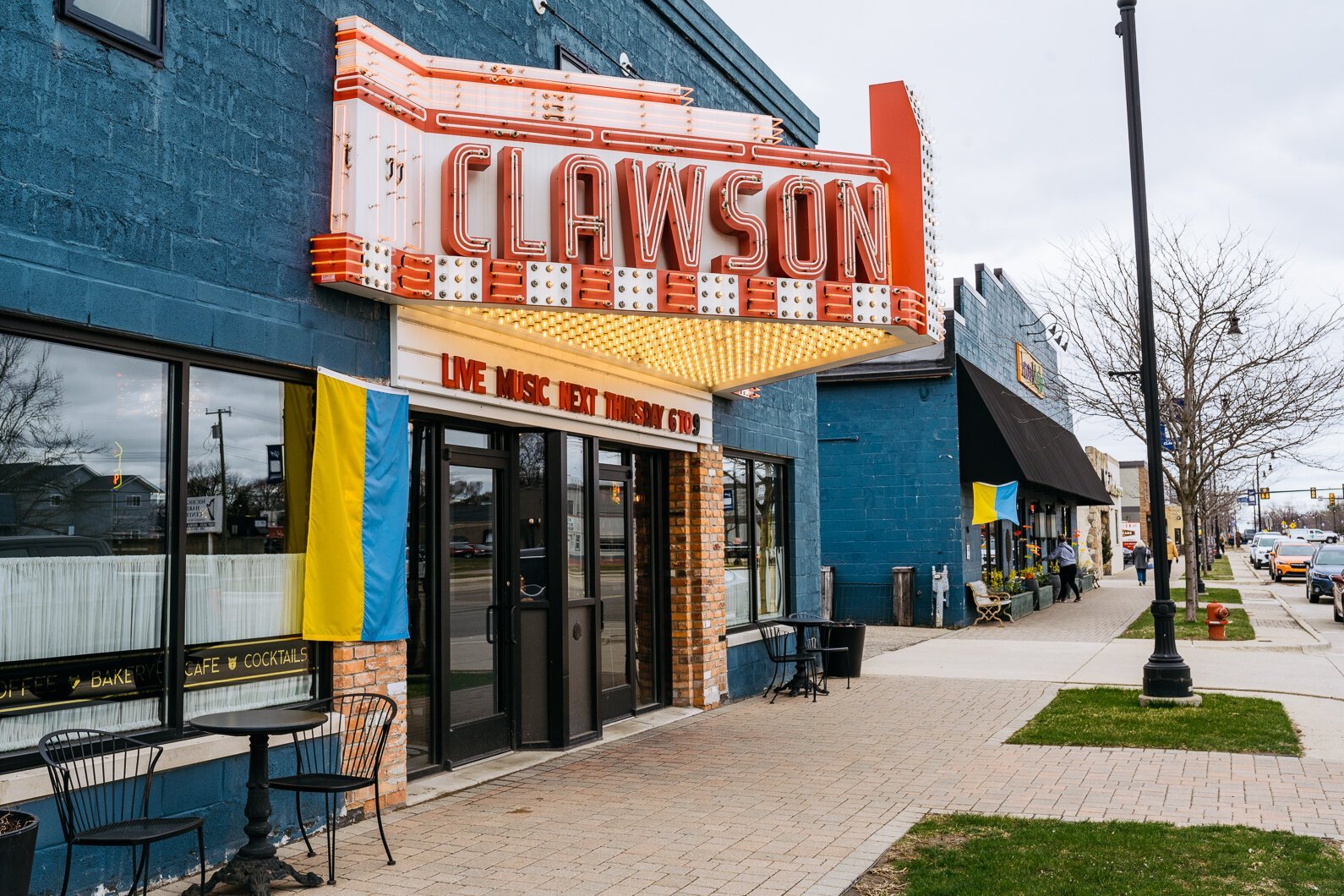
Clawson
A little farther east, Clawson offers almost the opposite experience from Bloomfield Hills. Small, compact, and centered around its downtown, Clawson has developed a reputation for being one of those Metro Detroit communities where you can genuinely spend an afternoon without needing to drive from one destination to another.
Downtown Clawson is concentrated around Main Street and 14 Mile Road, with independent shops, restaurants, bars, a distillery, a weekend market, and community events all packed into a relatively small area. The city's Downtown Development Authority describes the district as its "Little City, Big Heart" and actively promotes its walkable collection of local businesses and events. That sense of scale is what makes Clawson so appealing.
It doesn't feel like a massive suburban commercial district. You can park, walk around, grab a coffee, browse a shop, have lunch, and run into people you know. The downtown has a casual, neighborhood-oriented personality that feels particularly appealing to people who want community without sacrificing access to Metro Detroit. The residential streets surrounding downtown also offer a nice variety of housing. You'll find older homes with character, smaller ranches, bungalows, updated properties, and newer developments mixed throughout the city.
Berkley
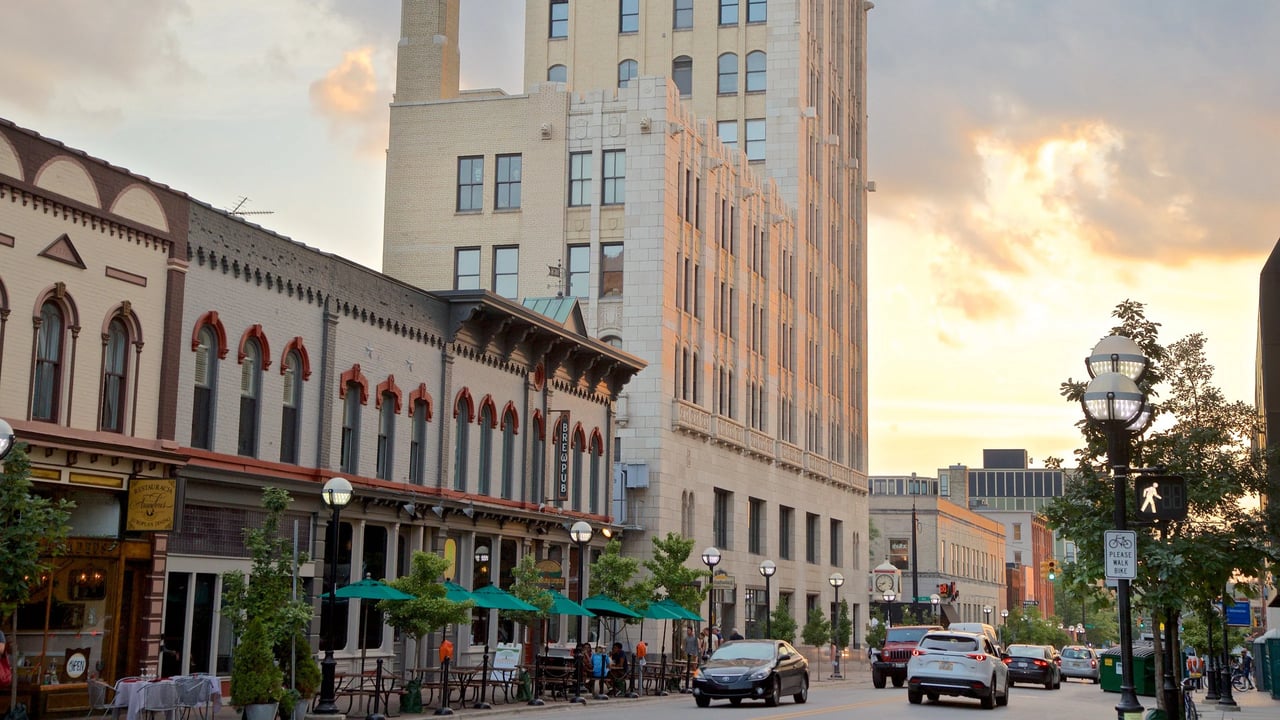
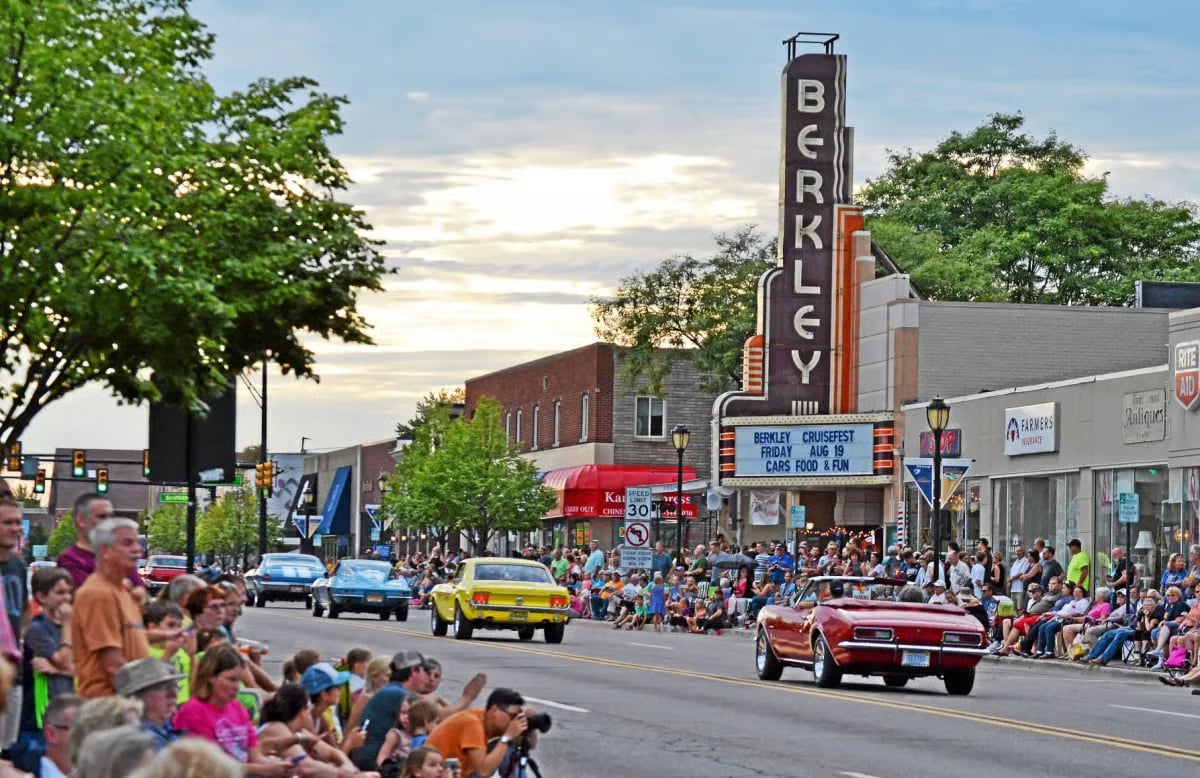
Just south of Birmingham, Berkley is another community that has managed to build a surprisingly strong small-town identity despite being firmly embedded in Metro Detroit. The city itself describes its appeal as "small town charm," and its downtown districts along Coolidge Highway and 12 Mile Road provide a collection of restaurants, shops, services, and community events. The city has also emphasized walkability, neighborhood parks, and its proximity to larger business, entertainment, and healthcare centers.
Berkley has a personality that is distinctly its own. There is a certain retro quality to the community, with older residential neighborhoods, independent businesses, neighborhood gathering spots, and streets lined with mature trees. The downtown isn't enormous, but that is part of its appeal. It feels like a place residents actually use rather than a destination built exclusively for visitors.
The city has also cultivated an active events calendar, which contributes to the community's identity throughout the year. Farmers markets, local events, shopping promotions, and neighborhood activities give residents plenty of opportunities to interact with one another outside of their homes. It is a community that works well for buyers who want a neighborhood first and a downtown second, but still want that downtown to be close enough to walk or bike to.
Royal Oak
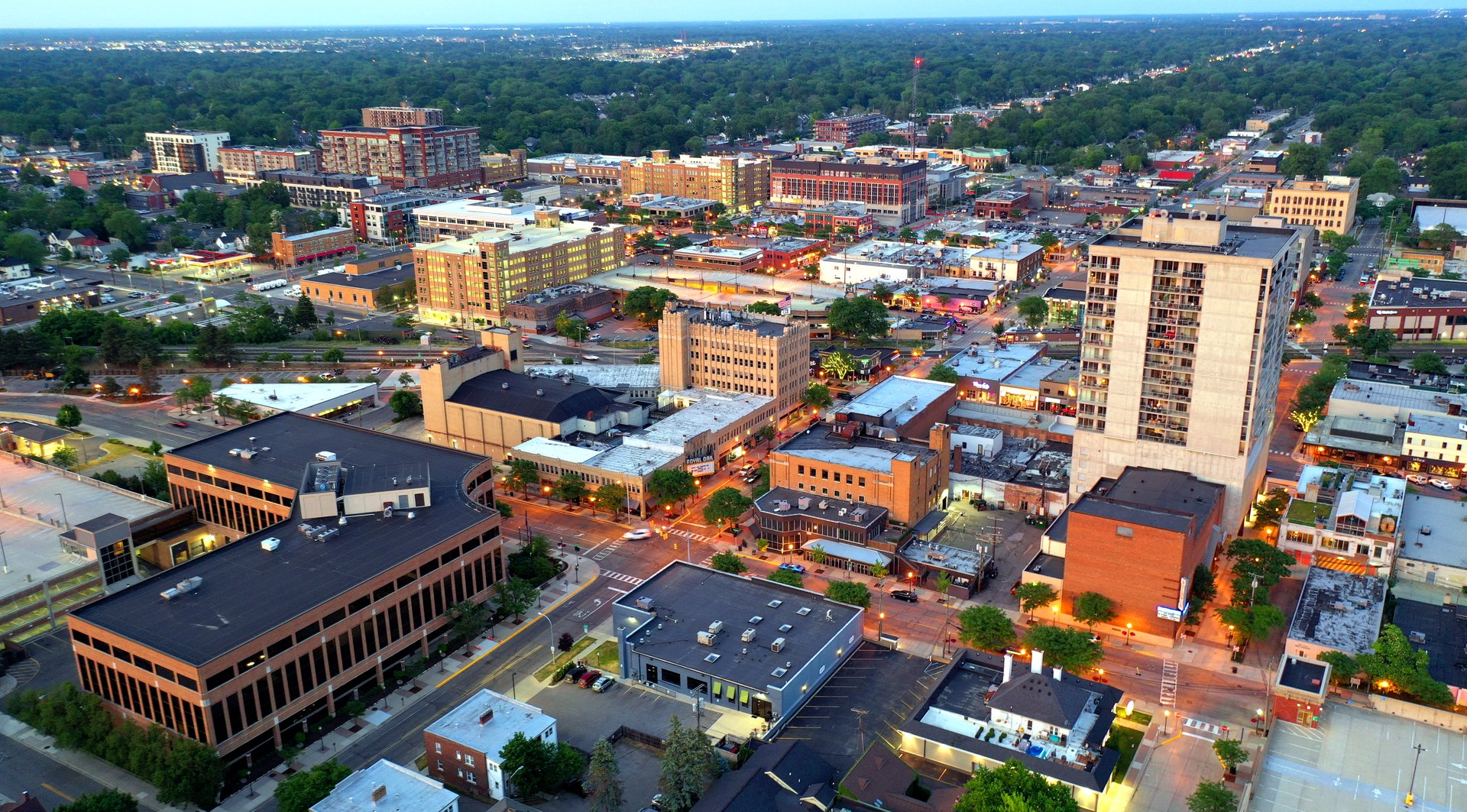
Royal Oak may be larger and busier than what most people picture when they hear "small town," but it deserves a place on this list because of how effectively its downtown creates a traditional community-center experience. Downtown Royal Oak is one of Metro Detroit's most walkable and active destinations, with hundreds of businesses ranging from independent restaurants and cafés to retailers, entertainment venues, and nightlife. The city itself describes downtown as a vibrant, walkable district with year-round events and a mix of locally owned businesses and national retailers.
The biggest difference between Royal Oak and communities such as Franklin or Bingham Farms is energy. Royal Oak is busy. On a summer evening, the sidewalks are full, restaurants have patios open, events bring people downtown, and the city stays active well into the evening. The downtown is also large enough that you can return again and again and continue finding new restaurants, shops, events, and businesses.
At the same time, Royal Oak has extensive residential neighborhoods surrounding the downtown district. That gives buyers the opportunity to choose between being close enough to walk to restaurants and entertainment or living farther out on a quieter residential street.
Rochester
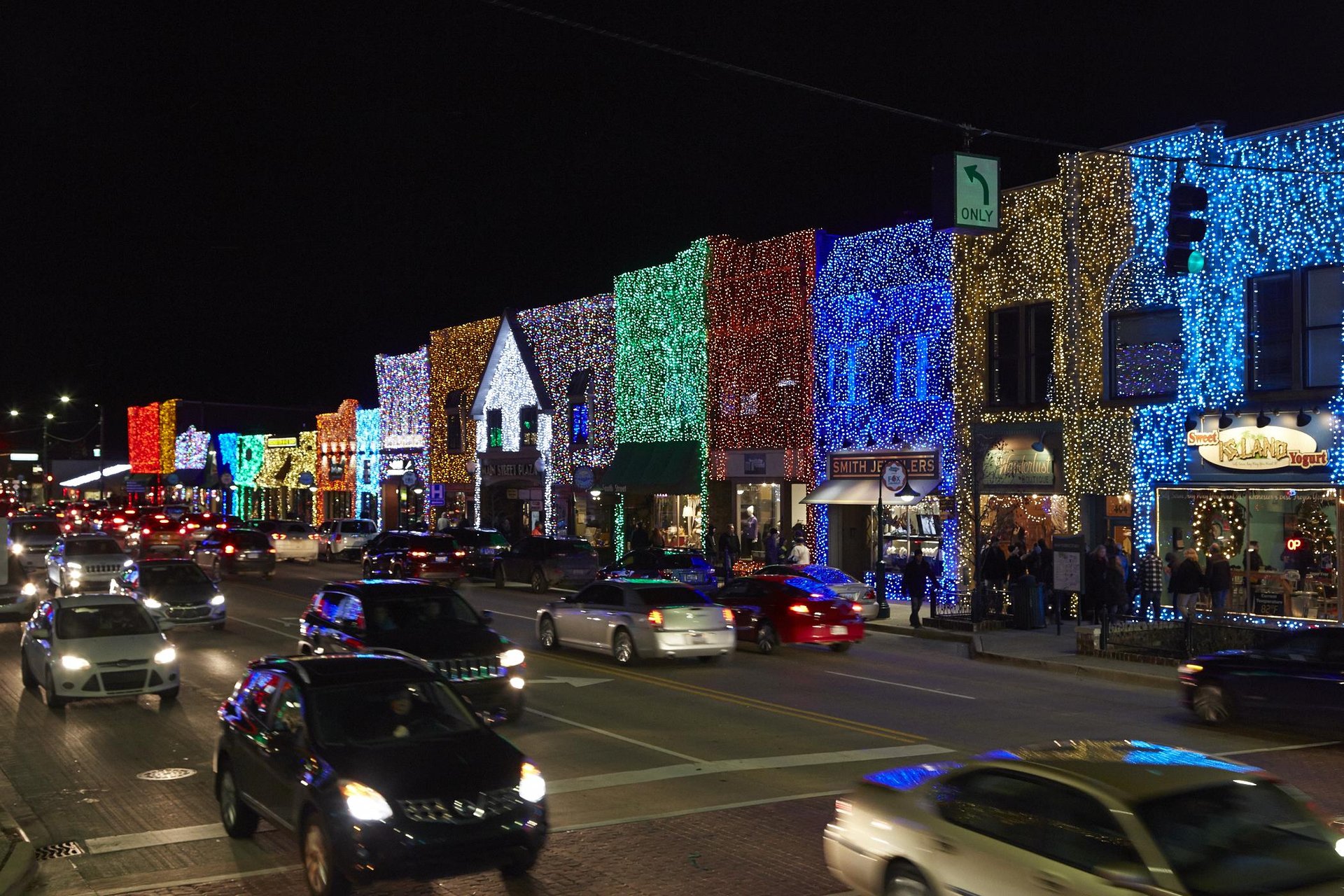
Toward the northeastern edge of the radius, Rochester offers another distinctly different version of small-town Metro Detroit living. Downtown Rochester combines historic architecture with a large collection of independent businesses, restaurants, salons, shops, and professional services. The downtown organization notes that the district contains more than 400 businesses, with the large majority independently owned, giving the area a particularly strong local-business identity.
The community also benefits from its relationship with the surrounding natural landscape. Waterways, parks, and trails help give Rochester a greener and more picturesque atmosphere than you might expect from a suburban community. That combination of downtown activity and natural beauty is one of Rochester's strongest characteristics.
You can spend a Saturday morning walking through downtown, stopping into locally owned shops, grabbing coffee or brunch, and then head toward one of the area's parks or trails. During the holiday season, the downtown becomes particularly charming, while summer brings outdoor dining, community events, and a steady stream of visitors. Rochester also has a broad range of residential neighborhoods, from older homes near the downtown area to larger suburban properties farther out.
Ultimately, one of the biggest advantages of the Birmingham area isn't necessarily living in Birmingham itself, it's having choices. The communities surrounding Birmingham offer different versions of suburban Metro Detroit living, and many of them are close enough that you can enjoy the amenities of one community while calling another one home.
There is no single definition of the "Birmingham lifestyle." For some people, it means being able to walk to a restaurant or boutique. For others, it means having a large backyard surrounded by mature trees. For someone else, it might mean living in a historic home, being close to parks, having a strong neighborhood community, or simply being within a short drive of several different downtowns.
It's about finding the community that feels most like home.